Showing posts with label eyes. Show all posts

Wednesday, January 12, 2011

Reading in the Dark is Bad for Your Eyes

Myth or truth?

I get asked about this almost every day at work. Will it make my eyes worse? Is it why my eyes feel tired? Should I turn the lights up? No. Probably. Yes.

Our eyes have to work to focus every time we are reading or looking at things up close. It's called accomodation. Little muscles inside the eye cause the little lens inside the eye to change shape so near objects come into focus.

It doesn't take a genius to figure out that things are harder to see in the dark. So, in the dark, the stimulus for accomodation is decreased and our eyes lose focus.

Our eyes will continually lose focus and then re-focus causing them to fatigue and strain.

There is a little myth to it though. Your eyes won't "get worse" from reading in the dark. By this I mean there won't be any change in prescription or need for stronger glasses.

Wednesday, January 5, 2011

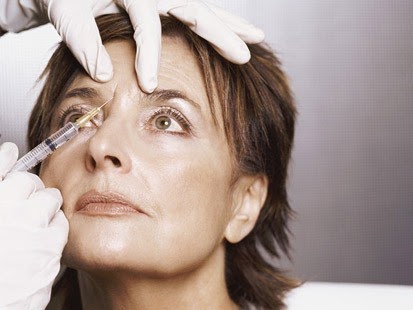
Botox

Most people have heard of botox therapy for cosmetic purposes to get rid of wrinkles. But what exactly is botox and what else is it used for?

Botox = Botulinum Toxin AKA one of the strongest neurotoxins known to man, which is produced by the bacteria Clostridium botulinum.

Basically, it causes complete paralysis of all muscles it comes into contact with and can be lethal if it somehow enters the bloodstream.

Botulinum toxin is so potent that a dose as small as 100-200 nanograms can be lethal to an average human (one nanogram is one billionth of a gram). 4kg of the stuff would be enough to wipe out the entire world's population!!
But Botox has some real Medical Uses:

In Eye Care:Blepharospasms - Spasms of the muscles that control blinking (uncontrolled twitching or blinking)
Strabismus - Eye turns due to over-action of muscles that control eye movement

The effects of Botox last about 4-6 months, so patients would need to have multiple injections per year.


Wednesday, December 8, 2010

Computer Vision Syndrome

I have a lot of patients who come in with complaints of eye strain while on the computer, while at work and home.

This is a condition referred to as Computer Vision Syndrome (CVS).
What causes CVS?
1) Need glasses? Uncorrected refractive error (learn more here) can make viewing the computer monitor very uncomfortable.

2) Looking at a computer monitor requires the focusing system inside our eyes to work constantly. Essentially fatiguing the tiny muscles inside our eyes.

3) Reflections from the screen can make it difficult for our eyes to focus accurately, thus causing our eyes to work harder.

4) Incorrect viewing angle can force the muscles on the outside of our eyes to work harder and fatigue.

5) People tend to blink less when at the computer. This leads to dry eyes.

What can be done?
1) First and foremost, get an eye exam. Even if you don't need glasses for other things in life, a simple pair of computer glasses may cure all woes.

2) Take breaks!! Remember 20/20/20. Every 20 minutes, look into the distance (at least 20 feet away) for at least 20 seconds. This will help relax your eyes.

3) Screen protectors are useful. Also, anti-reflective coatings on glasses are very helpful.

4) Ergonomics! Our eyes are most comfortable when looking slightly downward. There are very detailed workplace guidlines available for positioning and posture at the computer.  The American Optometric Association recommends that the center of the monitor should be approximately 15-20 degrees below eye level.

5) Blink more. Make a conscious effort. Also, using artificial tears can help moisturize your eyes. Remember our last discussion on Visine. Always best to ask your eye care professional which drops are best for you.

Thanks for reading. As always, questions are welcome and please feel free to forward this information on to anyone who may be interested.


Tuesday, October 26, 2010

Night Vision

Remember to find me on Twitter and Facebook for more interesting Eye Info.

Night Vision:

As was mentioned in an earlier blog, there are two types of cells in the eye that detect light: Rods and Cones.

  • Cones are for bright light and colour vision. Rods are for night vision and detecting motion in our peripheral vision.
  • Rods are very sensitive to small amounts of light because they have a high amount of pigment to absorb light and because there are many more rods than cones.

Night Vision Goggles (NVG)

There are multiple steps to NVG function:
  • First, light is gathered
    • Sensors detect small amounts of light that are reflected off objects (this includes low levels of infra-red light which is not visible to the human eye)
  • Then, light is amplified
    • Just like turning the volume up on a stereo, the small amounts of light are made brighter
  • Finally, an image is projected
    • The new amplified image is shown on a small LCD screen
Since night vision goggles are sensitive to infra-red light, objects that give off a lot of heat will appear very bright (ex. light bulbs and headlights)


Humans vs. Animals:

Human night vision is very poor compared to most animals. This is because a lot of animals have an extra layer in the retina called tapetum lucidum
  • This extra layer reflects light within the eye, basically making it more intense (kind of like NVGs)
  • It is also the reason why we see different coloured reflections through the pupil of most animals

FAQ:
Q: What if a person had only rods, and no cones?
A: This person would be completely colour blind because rods cannot detect colour. They would also have very poor vision since cones are needed for central vision.

Q: How many rods are there in the retina?
A: There are approximately 120 million rods and about 7 million cones. Cones are packed tightly in a tiny central area called the macula. Rods are spread out over the rest of the retina.

Q: Do night vision goggles always show a green image?
A: Yes. This is done deliberately because human vision works best with greens and yellows.

Q: Can I get night vision goggles?
A: Yes, but don't expect them to be as cool as what you see in movies. Goggles that are available to consumers are older technology and lower quality. The newer, better stuff is reserved for military use only!

Q: Can I get tapetum lucidum?
A: Not unless you plan on stealing a raccoon's eyes. Good luck.

As always, thank you for reading. Please feel free to pass this information on to anyone who may find it useful. Questions, comments, and suggestions are welcome.

Thursday, October 21, 2010

Whats Your Eye-Q?

The American Optometric Association published the results from their 5th annual Eye-Q Survey. The survey asks men and women all sorts of questions about their eye health including allergies, UV protection, nutrition, and aging. Interestingly, men and women didn't always see eye to eye (yes, pun intended).

Check out this year's Eye-Q Survey Results here.

Take a simple Eye-Q Test for yourself!


Grade yourself as follows: 19-20, I understand my eyes very well; 17-18, my view of my eyes is pretty clear; 15-16, my concept of my eyes is a little fuzzy; 13-14, the way I see my eyes could use a little correcting; and 12 or under, my eyes need much more understanding.


True False Questions
    1. At a distance of ten inches, my eyes can detect an object as small as four thousandths of an inch in size.
    2. My eyes can distinguish only four colors.
    3. My eyes can see a candle 14 miles away.
    4. Ten percent of what I know comes through my eyes.
    5. Reading in dim light can put a strain on my eyes.
    6. When viewing the TV, I should sit a distance equal to twice the width of the screen.
    7. A lack of vitamin A in my diet can cause reduced night vision.
    8. Dilation of the pupils allows my doctor to see a better view of the inside of my eyes.
    9. The best color for sunglasses is blue.
    10. Tears contain substances that slow down bacterial growth.
    11. My eyelids work much like a car's windshield wipers.
    12. Sunglasses will allow me to look directly at the sun.
    13. Many prescriptions for eyeglasses are identical.
    14. Smoking can effect my vision.
    15. If I have 20/20 vision, I don't have any eye problems.
    16. Air pollution affects only my lungs and breathing.
    17. If I am nearsighted, I see near objects more clearly than distant ones.
    18. If I am farsighted, I see distant object more clearly than near ones.
    19. Glaucoma is a serious eye disease that can cause blindness.
    20. Regular eye examinations can help protect my eyes and general health.

ANSWERS: 1.T. 2.F. 3.T. 4.F. 5.F. 6.F. 7.T. 8.T. 9.F. 10.T. 11.T. 12.F. 13.F. 14.T. 15.F. 16.F. 17.T. 18.T. 19.T. 20.T.

Tuesday, October 19, 2010

Why Aren't My Eyes Blue?


Don't forget to check out Facebook and Twitter for this info plus more!

What determines a person's eye colour?

Genetics play a important role
. However, determining the combination of genes and chromosomes is very complicated and random mutations happen quite often.

The main factors that determines the colour of a person's eyes are:

  • The amount of melanin (a dark pigment), which is determined by the number of melanocytes (cells that make the pigment) in the iris (coloured part of the eye)
  • Presence of some other less common pigments in the iris
  • Deposits of proteins in the iris
  • All of these come together and affect the way light is scattered and absorbed at the front of the eye
For this reason darker-skinned people generally have darker coloured eyes and lighter-skinned people have lighter eyes.

FAQ:
Q: Is it possible for eyes to change colour?
A: Yes. But it would most likely happen early in life. Babies can be born with a low amount of melanocytes which slowly increases with age.

Q:
Can I change my eye colour?
A: Yes, with contact lenses :-)

Q: Is it possible to have two different coloured eyes?
A: Yes. It's called heterochromia. Its also possible to have different parts of the same iris be different colours. This is partially genetic and partially the way the pigment is dispersed.

Q: Are there any medical implications to eye colour?
A: Yes. Lighter eyes tend to be at higher risk for Age-Related Macular Degeneration and ocular cancers. Likely due to some protective effects of pigment.

Q: Why do you keep spelling colour with the letter "U" in it?
A: Because I am a British Canadian.

Thanks for reading. Your questions, comments, and suggestions are always very welcome. Please feel free to pass this info on to anyone who may be interested.


Tuesday, October 12, 2010

The Eye Exam - Why Is It So Important?

Remember, this info plus much more is available on my Facebook and Twitter pages.


Everyone knows that your Optometrist is the person to see for your glasses and contact lens prescriptions. But, the health portion of the exam is often overlooked by patients.

There are many, many ocular and systemic conditions that can be detected and followed by your Optometrist with regular eye exams. Here is a short list of some of the more important/common conditions:

  • Glaucoma
  • Cataracts
  • Macular degeneration
  • Retinal detachments
  • Retinal holes and tears (common in highly near-sighted patients)
  • Bacterial and viral infections
  • Eye turns and lazy eyes
  • Colour deficiencies
  • Stereopsis (our ability to see 3D)
  • Diabetes
  • High blood pressure
  • High cholesterol
  • Thyroid problems
  • Inflammatory conditions such as: colitis, Crohn's disease, rheumatoid arthritis, psoriasis
  • Vitamin deficiencies
  • Brain tumors
  • Nerve problems in the eye and brain
  • Stroke
  • Blocked arteries in the neck and head
  • HIV/AIDS
  • And many more...
Thanks for reading. Any and all feedback, questions and comments are always welcome. Please feel free to pass this information on to anyone who may be interested.

Tuesday, September 21, 2010

Laser Eye Surgery


Laser procedures are commonly used to treat refractive errors (ie. near- or far-sightedness and astigmatism), with the end goal of providing the patient with clear vision without glasses or contact lenses.

There are 2 major types of Laser Refractive Surgery. While the process is a little different, they both essentially flatten the cornea (for near-sighted) or steepen it (for far-sighted):

LASIK - Laser-ASsisted In-situ Keratomileusis
  • The more recent of the 2 procedures
  • Most common due to shorter recovery period after surgery (not necessarily better results)
  • Requires the surgeon to make a thin "flap" of the surface of the cornea before using the laser
  • The flap is replaced after the the surgery - effectively producing a natural bandage for the eye

PRK - PhotoRefractive Keratecomy
  • The older of the two procedures
  • Less common of the two due to longer healing period
  • Still produces accurate results
  • Usually used for patients with thinner corneas (not enough thickness to form flap before using laser)

FAQ:
Q: Do I still need to have regular eye exams if I can see perfectly after my surgery?
A: YES YES YES!!! Patients who have had laser surgery need regular eye exams more than the average population! Firstly, they have had surgery. Next, the majority of patients that have these procedures are near-sighted and the primary cause of near-sightedness is an increased length of the eye. This causes stretching of internal structures (such as the retina) and leaves these patients with a higher risk for retinal detachments. This does not change just because they no longer have to wear glasses!

Q: Is it safe?
A: Yes. The surgeons that do these procedures, do hundreds to thousands per year. Technology is improving daily to provide more accurate results. Complications occur in less than 0.5% of patients.

Q: Is my prescription too high?
A: Most likely not. Refractive errors as high as -12.00 can be successfully treated. Tiger Woods and Roberto Luongo were about -10.00 and -11.00 respectively before having their surgeries.

Q: What are the common side effects or complications?
A: The number one post-operative complaint is dry eyes. Halos around lights, decreased night vision, sensitivity to light, and recurrence of prescription are also well documented. Most surgeries are guaranteed for 5-10 years. After which, it is possible the patient will require glasses again or a "touch up" surgery.

Q: What are the alternatives?
A: Intacs and Ortho-K are 2 possible options. Intacs are very small corneal implants that create the same effect as laser surgery of flattening the cornea. Ortho-K are contacts that you wear while you sleep. Again, these have the effect of flattening the cornea. In the morning, you take them out and don't need to wear any glasses or contacts during the day. The benefits of these 2 alternatives is that they are both fully reversible. These are limited to lower prescriptions of approximately -1.00 to -4.00.

Thank you for reading. I hope you found this information useful. Please feel free to contact me with questions and comments.

Find me at Facebook.com/HarbirSianOD and Twitter/HarbirSianOD!


Tuesday, September 7, 2010

Are Carrots Good for Your Eyes??

The answer is "Yes... However..."
  • Carrots are high in Beta Carotene, which our body converts to Vitamin A
    • Vitamin A is very important for the health of your eyes, helping the retina function more efficiently
However...
  • Eating lots of carrots will not change/improve your glasses prescription

Find me at Facebook.com/HarbirSianOD and Twitter.com/HarbirSianOD for more info!

As usual, questions, comments, and suggestions are welcome.

Tuesday, August 31, 2010

The Dreaded Air Puff Test

Almost everyone who has seen an Optometrist recently has had to endure the excruciating agony of a "gentle puff of air" to their eyes. But why?!

  • Purpose:
    • A screening test for glaucoma
    • Measures the pressure inside your eyeball
    • Increased pressure inside the eye can lead to glaucoma
  • Technical term for the air puff is Non-Contact Tonometry
FAQ:
Q
: Does it make a difference if I'm a fidgety Nancy? And is there an alternative test?
A: Yes and yes, Nancy! Movement can affect results. The alternative involves a drop of anesthetic and small plastic probe touching the front of your eye. This is actually the most accurate method.

Q: What is a normal pressure reading?
A: The normal range is 10 to 20

Q: What is Glaucoma?
A: Damage to the Optic Nerve often due to high pressure inside the eye compressing nerve fibers. Causes vision loss, usually starting with peripheral vision.

Q: How do I know if I have Glaucoma?
A: It is important to know the risk factors: age over 50, family history, and high intra-ocular pressure. But the only way to know is to visit your eye doctor.

Questions and comments are always welcome. Please feel free to forward this information to anyone who may find it useful.

Tuesday, August 24, 2010

Color Blindness

  • Most people have heard of Rods and Cones in our eyes
    • Cones are for color and Rods are for night vision
    • There are 3 kinds of Cones: red, green, and blue
    • Cones don't actually sense color, they sense wavelengths of light and these are translated by the brain in to colors
  • Its actually very rare for a person to be color "blind" (unable to see colors)
  • More commonly people have a color "deficiency"
    • This means that one type of cones is not sensing the correct wavelength
    • This result in confusion between colors
 
FAQ about Color Blindness:
Q: What is the most common color deficiency?
A: Green deficiency (medical term: Deuteranomoly) is most common. This results in difficulty with greens, reds, and mixtures of these colors.
 
Q: Is it more common in men or women?
A: Men! 8% of men have color deficiency compared to only 0.5% of women.
 
Q: How do I know if I have a color deficiency?
A: If you have difficulty distinguishing between greens, reds, or mixtures of these. Take a quick test by looking at the attached image one eye at a time. If you miss more than 2, you may have a color deficiency.

As usual, all questions and comments are greatly appreciated and feel free to pass this info on to anyone who may be interested.


Tuesday, August 17, 2010

Pink Eye

What is it?
- Pink eye (aka Viral Conjunctivitis) is a Viral infection of the thin outer covering of your eyeball
- Symptoms include: redness, burning, watering, puffy/swollen eyelids (all can last 1-2 weeks)

What causes Pink Eye?
- It is most common during cold/flu season, usually a result of people touching their eyes after coughing or sneezing

FAQ about Pink Eye:
Q: Can you get pink eye if someone farts on your pillow?
A: NO!

Q: Can you get pink eye if someone licks your face?
A: YES! (Actually had a patient with this!)

Q: What is the best way to prevent it?
A: Wash your hands. And make sure nobody licks your face.

As always, all questions and comments are welcome. And please feel free to forward this information on to anyone who may be interested.

Tuesday, August 10, 2010

Eye Floaters!

What are floaters?
- There is a gel that takes up most of the space inside the eye called the Vitreous
- The little dots or squiggly lines we see when looking at something bright (ex. a white wall) are areas of the vitreous that are slightly thicker thus casting shadows on the retina
- Mostly these are nothing to worry about

When are floaters significant?
- Floaters can be a sign of Vitreous Detachment or, more significantly, Retinal Detachment
- If you ever notice lots of new small floaters or a new large floater, this is something to be concerned about

 Click here to watch a funny video from The Family Guy about Floaters. Forward to the 35 sec mark.


Tuesday, August 3, 2010

Why Do My Eyes Itch?

Allergies

- most obvious answer, but not necessarily most common
- signs: swollen/puffy eyelids, watery eyes, bumps under eyelids (seen by your doctor), diffuse and more intense itch

Blepharitis (blepharo- = eyelids, -itis= inflammation)
- so, inflammation/irritation of eyelids, very common
- could be due to mild bacterial infection or blockage of glands at the base of eyelashes
- signs: redness along eyelid margin, itchiness usually concentrated at eyelid margin or at the corners of your eyes but not as intense as with allergies, also watery eyes

As always, your questions are welcomed and encouraged.

Tuesday, July 27, 2010

Why Does My Eye Twitch?

There are multiple known factors that can contribute, including:
- stress
- lack of sleep or change in sleeping pattern
- low calcium levels or other electrolyte imbalances
- fatigue
- dry eyes
- caffeine
- alcohol
The medical term for eyelid twitching is Myokemia

Treatment for eyelid twitching usually involves resolving the above factors. In some rare cases, a botox injection is needed to relax the small muscles around the eye that are over-active.

Tuesday, July 20, 2010

Near-sightedness

  • The medical term for being near-sighted is Myopia
  • The term near-sighted is used simply because myopes are able to see close objects more clearly than distant objects
  • The most common cause for myopia is an increase in axial length (front to back) of the eye during childhood and teenage years
  • This results in images being focused in front of the retina
  • Near-sightedness is easily correctable using "minus" lenses, thus a myopic person's prescription will always have a negative sign in front
Ex. If you consider a movie projector and screen. A myopic eye would be analogous to someone pulling the screen back so the image is out of focus.