Showing posts with label glaucoma. Show all posts

Thursday, March 12, 2015

FOR YOUR EYES ONLY - ARE CARROTS GOOD FOR YOUR EYES?

You may remember a blog I wrote a while back which answered this age old questions.
Well, Dr. Eyenstein and I decided to tackle it in vlog form as well. Enjoy!


Monday, May 16, 2011

Georges St-Pierre's Eye Injury

If you watched the UFC 129 championship fight on April 30th or saw pictures immediately following, you probably wouldn't have suspected any serious problems with Georges St-Pierre's left eye. Fine, it was a little swollen and maybe there was a little blood but honestly, not much more than you might expect after going 5 rounds in an MMA title fight.

But during the fight GSP was poked in the left eye and, as a result, was left almost blind in that eye for the remainder of the fight. After the fight, the champ was taken straight to the hospital to be examined and it was determined that he had suffered a hyphema, which is essentially bleeding inside the front segment of the eyeball. As we know, blood is not clear, so when it starts to fill up behind the cornea (the clear dome at the front of the eye), you can assume it will begin to cloud vision.
For those who have read my blog before, you may remember I spoke a little about hyphemas recently when Vancouver Canucks center Manny Malhotra suffered a serious, season-ending injury after being hit in the eye by the puck.

Hyphemas generally clear up on their own with a little rest as the body resorbs the blood over time (kind of like a bruise). But in some cases they can lead to permanent vision loss and increase the risk for glaucoma. Basically, the blood can stick to the inside of the cornea and leave it looking "dirty", thus resulting in blurry vision. It is also possible for the blood cells to clog up the draining system inside the eye which results in a back up of fluid thus increasing the pressure inside the eye. This increased pressure is what leads to glaucoma.

Fortunately for GSP, there were no other serious problems such as retinal detachments and after a couple of weeks of rest, his vision has returned and he is back in gym training.

As you can imagine, eye injuries are pretty common in a sport where you're constantly dealing with blunt trauma to your face. From a fighter's perspective, it creates a serious challenge. Whether the eye is swollen shut or filled with blood, the fighter loses depth perception and can no longer judge distances well. That makes throwing punches, blocking punches, and attempting takedowns all very difficult.

Luckily GSP was able to overcome all of those difficulties and successfully defend his title.


Related Posts:
Eye on Manny Malhotra
Why Josh Koscheck Lost: An Eye Doctor's Perspective
Mirko Cro Cop Suffers Serious Eye Injury

Monday, March 21, 2011

Eye on Manny Malhotra


OUCH! That's the first thought that came to mind when I saw the injury Manny Malhotra sustained during last week's game against Colorado. Not the average ouch "that looks like it hurts"... it was a more serious OUCH! "I hope its not a detached retina".

Manny suffered a blow to the eye and eye socket (orbit) by a deflected puck. Any injuries to the eye can have a lot of different and potentially serious consequences. While the blood dripping from his brow was enough to make some people think the worst, its actually the stuff you don't see that is most concerning.

The Canucks just announced today that Manny will not be returning to play for the rest of the season (including playoffs). Based on this report, its a safe bet that this problem is a lot more serious than a few stitches a couple of Tylenol tablets. However, the Canucks would not report on what exactly Malhotra's current condition is.

Since the Canucks won't tell us, let's talk about some possibilities...

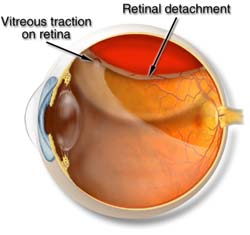
Detached Retina - The retina is a thin film that lines the inside of our eyes and is reposible for receiving images before they are sent to the brain. Compression of the eyeball causes the retina to lose shape and detach. Retinal detachments do not cause any pain.


Cataract - Trauma can cause changes to the lens inside the eye. It becomes clouded and makes vision blurry. Very dense cataracts can cause the pupil to look white rather than the usual black.


Glaucoma - Damage to the nerve (Optic nerve) that sends signals from the retina to the brain. The drainage system inside the eye can be damaged (Angle recession glaucoma) due to impact or blocked by blood building up inside the eye (hyphema, see image below). This causes pressure inside the eye to increase and compress the optic nerve.

Corneal abrasion - The cornea is a clear dome at the front of the eye. It is very fragile and can be easily scratched or scraped. Very painful and can leave a permanent scar.

Orbital bone fracture - The eye socket is formed by mutiple little bones. Breaking any one of these can result in different complications including sinus leakage, trapped eye muscles, and nerve damage.

All the conditions mentioned above can lead to partial or complete, temporary or permanent loss of vision in the affected eye.

A Few Other Notable Eye Injuries in Recent Years

Mattias Ohlund (1999)-
Injury: Hyphema, cataract, glaucoma
Treatment: Multiple surgeries, has a small tube permanently implanted to allow fluid to drain from his eye
Missed: 2 months


Bryan Berard (2000)-
Injury: Detached retina and cataract, legally blind in right eye
Treatment: 7 surgeries
Missed: One and a half seasons


Steve Yzerman (2004)-
Injury: Broken orbital bone and scratched cornea
Treatment: Surgery
Missed: 2004 playoffs and 2004 World Cup


Mats Sundin (2005) -
Injury: Broken orbital bone
Missed: 1 month


Can you guess what all of these players (including Manny) had in common? Drum roll, please...
Answer: None of them were wearing a visor on their helmet.

So why, in a sport that is based around a 3-inch disk of solid rubber flying through the air at 100 mph and careening in different directions within the blink of an eye, doesn't the NHL make it mandatory to have some sort of eye protection?

Bryan Berard said AFTER returning from his injury "We're pro athletes, and the choice should be ours."

I guess thats why...

For the rest of us NON-professional athelets, please try to use protective eyewear whenever possible!!
--

Recent Popular Posts:
Snoop Doc and Dr. Dre, OD
How Trevor Linden Sold Out: The Prequel
How Trevor Linden Sold Out: An Eye Doctor's Perspective

Monday, February 14, 2011

Snoop Doc and Dr. Dre, OD

"Got some bubba, give me that. I need it for my cataracts." - Snoop Dogg in "Kush" by Dr. Dre.

While I applaud Mr. Snoop D-O-double-G for his awareness of ocular disease and the potential for using marijuana as treatment, there are some things that we need to straighten out.

Firstly, yes, marijuana can be prescribed for certain medical conditions. BUT! It's use is very limited and strictly regulated. In the medical field, its uses are mostly limited to patients who are being treated for cancer, severe pain, or terminal illnesses. In cancer patients it is used as an anti-emetic (decrease vomiting) and to increase appetite during chemotherapy.

A couple of weeks ago, I received a text from an old friend... "Are there any diseases of the eye that marijuana can be legally prescribed for?" Yes, old friend, yes there are. But, unfortunately, nothing I can help you with :)

The only eye disease that marijuana could be helpful for is glaucoma (not cataracts, Snoop!). Glaucoma is a disease in which the optic nerve (in the back of the eye) is damaged and can result in loss of peripheral vision (and blindness, in severe cases). It usually only presents in older patients, age 55 and up. High intra-ocular pressure is thought to be one of the main causes of damage to the nerve. This is why we do the Air Puff Test.

Marijuana can reduce the intra-ocular pressure a little. But in order for it to be effective, a patient would need to smoke very frequently, as much as every 3 hours. While some people may consider that cutting back compared to their daily norm, its not exactly what I would call effective dosing. Especially when one little eye drop once a day can be twice as effective as smoking 4 joints a day. I'm just sayin!

As always, comments and questions are welcome. Check yearly, see clearly!


Special thanks to Dr. H. Khangura, MD

Thursday, October 21, 2010

Whats Your Eye-Q?

The American Optometric Association published the results from their 5th annual Eye-Q Survey. The survey asks men and women all sorts of questions about their eye health including allergies, UV protection, nutrition, and aging. Interestingly, men and women didn't always see eye to eye (yes, pun intended).

Check out this year's Eye-Q Survey Results here.

Take a simple Eye-Q Test for yourself!


Grade yourself as follows: 19-20, I understand my eyes very well; 17-18, my view of my eyes is pretty clear; 15-16, my concept of my eyes is a little fuzzy; 13-14, the way I see my eyes could use a little correcting; and 12 or under, my eyes need much more understanding.


True False Questions
    1. At a distance of ten inches, my eyes can detect an object as small as four thousandths of an inch in size.
    2. My eyes can distinguish only four colors.
    3. My eyes can see a candle 14 miles away.
    4. Ten percent of what I know comes through my eyes.
    5. Reading in dim light can put a strain on my eyes.
    6. When viewing the TV, I should sit a distance equal to twice the width of the screen.
    7. A lack of vitamin A in my diet can cause reduced night vision.
    8. Dilation of the pupils allows my doctor to see a better view of the inside of my eyes.
    9. The best color for sunglasses is blue.
    10. Tears contain substances that slow down bacterial growth.
    11. My eyelids work much like a car's windshield wipers.
    12. Sunglasses will allow me to look directly at the sun.
    13. Many prescriptions for eyeglasses are identical.
    14. Smoking can effect my vision.
    15. If I have 20/20 vision, I don't have any eye problems.
    16. Air pollution affects only my lungs and breathing.
    17. If I am nearsighted, I see near objects more clearly than distant ones.
    18. If I am farsighted, I see distant object more clearly than near ones.
    19. Glaucoma is a serious eye disease that can cause blindness.
    20. Regular eye examinations can help protect my eyes and general health.

ANSWERS: 1.T. 2.F. 3.T. 4.F. 5.F. 6.F. 7.T. 8.T. 9.F. 10.T. 11.T. 12.F. 13.F. 14.T. 15.F. 16.F. 17.T. 18.T. 19.T. 20.T.

Tuesday, October 12, 2010

The Eye Exam - Why Is It So Important?

Remember, this info plus much more is available on my Facebook and Twitter pages.


Everyone knows that your Optometrist is the person to see for your glasses and contact lens prescriptions. But, the health portion of the exam is often overlooked by patients.

There are many, many ocular and systemic conditions that can be detected and followed by your Optometrist with regular eye exams. Here is a short list of some of the more important/common conditions:

  • Glaucoma
  • Cataracts
  • Macular degeneration
  • Retinal detachments
  • Retinal holes and tears (common in highly near-sighted patients)
  • Bacterial and viral infections
  • Eye turns and lazy eyes
  • Colour deficiencies
  • Stereopsis (our ability to see 3D)
  • Diabetes
  • High blood pressure
  • High cholesterol
  • Thyroid problems
  • Inflammatory conditions such as: colitis, Crohn's disease, rheumatoid arthritis, psoriasis
  • Vitamin deficiencies
  • Brain tumors
  • Nerve problems in the eye and brain
  • Stroke
  • Blocked arteries in the neck and head
  • HIV/AIDS
  • And many more...
Thanks for reading. Any and all feedback, questions and comments are always welcome. Please feel free to pass this information on to anyone who may be interested.

Wednesday, October 6, 2010

Diabetes and the Eye

Don't forget to check out my Twitter and Facebook pages.


Diabetes is a disease that has grown and spread exponentially in the last 20 years, reaching epidemic proportions. Yet, many people do not know how devastating it can be and the effects it can have on the eye.

Background:

There are 2 main types of diabetes:
  • Type 1 (Insulin dependent):
    • Early onset (usually by teenage years)
    • Autoimmune disease - the body attacks itself and causes destruction of the cells that make insulin
      • Insulin is the chemical which promotes uptake of sugars from the blood into muscle and other tissues
    • Treated with insulin replacement
    • Can lead to death if not treated
  • Type 2 (Non-insulin dependent):
    • Later onset (usually over the age of 40)
    • Body tissues develop resistance to insulin
    • Very commonly associated with sedentary lifestyle, high fat diets, and obesity (No surprise its huge in North America!)
    • Treatment:
      • Early/mild: weight loss, diet changes, and exercise
      • Moderate: All of the above plus oral meds that encourage glucose uptake
      • Severe: All of the above plus insulin
    • Significantly increases risk of heart attack, stroke, and kidney failure
The end result for both, if not well controlled, is high sugar (glucose) levels in the blood stream.

Normal blood sugar levels:
  • Healthy patients should have glucose levels of approx 4 mM
  • Diabetic patients are instructed to try to maintain them below 6 mM
    • Uncontrolled diabetics often have glucose levels of 15-20 mM (if not higher)

The Eye:
While high sugar levels in the blood can affect the structure and function of cells and chemicals, the main concern in the eye is loss of integrity of the blood vessel walls.

The tiny retinal blood vessels can become leaky, thus allowing fluid, blood, and proteins to seep into the retina. If left uncontrolled, this can result in any combination of the following:
  • Diabetic retinopathy:
    • bleeding in the back of the eye, including leakage into the vitreous gel thus causing loss of vision
    • lack of blood and oxygen delivery to areas of the retina
      • death of retinal tissue - permanent loss of vision
      • development of new, weaker blood vessels (neovascularization) which can cause further leaking and fibrosis of the retina
  • Macular edema
    • swelling of the macula (central part of retina) causing decrease of vision
  • Retinal detachment:
    • Fluid leakage behind the retina or fibrosis due to new blood vessels causing it to be pulled away
  • Neovascular glaucoma:
    • Due to the lack of oxygen delivery, new blood vessels begin to grow at the front of the eye and block the drainage of fluid causing increased pressure in the eye which can result in damage to the optic nerve - yet another way to cause vision loss
If the diabetes is adequately treated, some of the milder problems can be reversed and vision may be restored.

If you have diabetes, or know someone who does, it is very important to keep in mind the effect it can have on your eyes. Regular, annual eye exams are imperative and are no less than the standard of care of diabetic patients.

If there are any questions please feel free to ask. And as usual, please forward this information on to anyone who may find it useful.

Thanks for reading.


Tuesday, August 31, 2010

The Dreaded Air Puff Test

Almost everyone who has seen an Optometrist recently has had to endure the excruciating agony of a "gentle puff of air" to their eyes. But why?!

  • Purpose:
    • A screening test for glaucoma
    • Measures the pressure inside your eyeball
    • Increased pressure inside the eye can lead to glaucoma
  • Technical term for the air puff is Non-Contact Tonometry
FAQ:
Q
: Does it make a difference if I'm a fidgety Nancy? And is there an alternative test?
A: Yes and yes, Nancy! Movement can affect results. The alternative involves a drop of anesthetic and small plastic probe touching the front of your eye. This is actually the most accurate method.

Q: What is a normal pressure reading?
A: The normal range is 10 to 20

Q: What is Glaucoma?
A: Damage to the Optic Nerve often due to high pressure inside the eye compressing nerve fibers. Causes vision loss, usually starting with peripheral vision.

Q: How do I know if I have Glaucoma?
A: It is important to know the risk factors: age over 50, family history, and high intra-ocular pressure. But the only way to know is to visit your eye doctor.

Questions and comments are always welcome. Please feel free to forward this information to anyone who may find it useful.