Wednesday, May 18, 2011

May is Vision Health Month!

Vision Health Month is an initiative that was started last year by the Canadian National Institute for the Blind (CNIB).

The goal is simple: Increase awareness about ocular disease and prevent vision loss.

Many eye diseases are "silent" and cannot be detected by the patient until there is significant vision loss. Unfortunately, this lost vision often cannot be recovered.

Glaucoma is a disease which usually starts off by affecting peripheral vision. Often times it is not noticed by patients until they start bumping into objects or have difficulty changing lanes when driving.

Macular degeneration is another slow moving disease that normally doesn't show up until our 50s. But it affects the macula, which is what we use for central vision.

Although the effects of these two diseases cannot be reversed, early detection can allow us to significantly slow the progression of the disease and allow patients to continue on with healthy, clear vision.

It is important to remember that just because a lot of diseases occur later in life, doesn't mean that prevention at earlier ages is not necessary.

Cataracts are a perfect example of this. Most people understand that cataracts generally develop with age and usually become significant in patients over 50. However, recent studies have shown that a majority of the damage to our eyes from UV light actually occurs in our youth, before the age of 17!

Three easy ways to help your vision:
Eat your veggies, Wear your sunglasses, and See your eye doctor! :)
---

Your Doctors of Optometry are here to help you with any questions you have regarding your eye health including kids' health, early prevention, surgery, and anything else you can think of!

In BC, kids 18 and under are free and seniors, 65 and over, are partially covered (amount depends on the clinic).

Check Yearly, See Clearly!

CNIB.ca
BCAO.ca

Monday, May 16, 2011

Georges St-Pierre's Eye Injury

If you watched the UFC 129 championship fight on April 30th or saw pictures immediately following, you probably wouldn't have suspected any serious problems with Georges St-Pierre's left eye. Fine, it was a little swollen and maybe there was a little blood but honestly, not much more than you might expect after going 5 rounds in an MMA title fight.

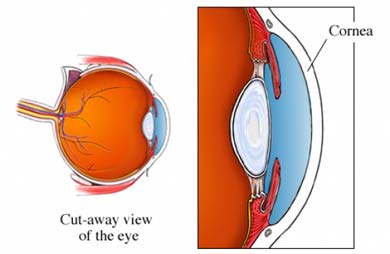
But during the fight GSP was poked in the left eye and, as a result, was left almost blind in that eye for the remainder of the fight. After the fight, the champ was taken straight to the hospital to be examined and it was determined that he had suffered a hyphema, which is essentially bleeding inside the front segment of the eyeball. As we know, blood is not clear, so when it starts to fill up behind the cornea (the clear dome at the front of the eye), you can assume it will begin to cloud vision.
For those who have read my blog before, you may remember I spoke a little about hyphemas recently when Vancouver Canucks center Manny Malhotra suffered a serious, season-ending injury after being hit in the eye by the puck.

Hyphemas generally clear up on their own with a little rest as the body resorbs the blood over time (kind of like a bruise). But in some cases they can lead to permanent vision loss and increase the risk for glaucoma. Basically, the blood can stick to the inside of the cornea and leave it looking "dirty", thus resulting in blurry vision. It is also possible for the blood cells to clog up the draining system inside the eye which results in a back up of fluid thus increasing the pressure inside the eye. This increased pressure is what leads to glaucoma.

Fortunately for GSP, there were no other serious problems such as retinal detachments and after a couple of weeks of rest, his vision has returned and he is back in gym training.

As you can imagine, eye injuries are pretty common in a sport where you're constantly dealing with blunt trauma to your face. From a fighter's perspective, it creates a serious challenge. Whether the eye is swollen shut or filled with blood, the fighter loses depth perception and can no longer judge distances well. That makes throwing punches, blocking punches, and attempting takedowns all very difficult.

Luckily GSP was able to overcome all of those difficulties and successfully defend his title.


Related Posts:
Eye on Manny Malhotra
Why Josh Koscheck Lost: An Eye Doctor's Perspective
Mirko Cro Cop Suffers Serious Eye Injury

Thursday, April 21, 2011

Eye Love Serendipity

I'm sure most of us would agree that some of the best things in life happen by accident. Indeed, some of the greatest scientific discoveries were the fruits of good fortune. Penicillin, vulcanized rubber, and even gravity were all accidental findings.
But these discoveries all pale in comparison to pharma company, Allergan's newest serendipitous breakthrough! (yes, I'm being mildly sarcastic)

In 2001, Allergan produced an eye drop named Lumigan (bimatoprost ophthalmic solution 0.03%). It's primary function was to decrease the pressure inside the eye in patients who had, or were at risk for, Glaucoma. Lumigan was very successful, but it had some interesting side effects.

Doctors noticed that patients were returning to clinics with very specific complaints. Their eyelashes were, all of a sudden, growing at exponential rates. So significant was the growth of these cilia, in fact, that eye doctors were actually having to trim some patients' lashes!

It didn't take long for someone at Allergan (I'm sure it was a woman) to realize how huge this could be. A few years of "research" later, plus a lovely new spokeswoman (Brooke Shields) and voila! In 2008, we have a product named Latisse, which just happens to be bimatoprost ophthalmic solution 0.03%. (How did that take 7 years??)


Anyway, Latisse promises (and, for the most part, delivers) longer, thicker eyelashes. You simply dab a little bit along the upper eyelash margin once a day for 16 weeks (that's 112 days to be exact) and before you know it you'll be a modern day Elizabeth Taylor (more on her later).

Check out the Latisse website (www.latisse.com) for their FAQ section which has answers to questions including side effects, application, and where to find this miracle drug.

Here is one of the more important question and answers from the website:
Question: Does Claire Danes really use LATISSE®?
Answer: Yes. Claire Danes is using LATISSE® and is happy with her results.

Well I'll be damned!! Sign me up then! 

---

Monday, April 18, 2011

Sunburn in Your Eyes?

Many people, especially those of us who are pigmenatally-challenged (not to be mistaken with people who are pigmentally-confused... urbandictionary.com), have suffered from the occasional sunburn. You get it on your shoulders, your back, even your face. But what about on or inside your eye? Yes, it can happen.

Photokeratitis, aka Solar keratitis, is basically sunburn of the cornea (the clear dome at the front of the eye). It happens when the eye is exposed to high amounts of UV light even if only for a short period of time. This can occur from natural sources (ie. the sun) or, more commonly, from artificial light (welder's arc).

The consequences are similar to those of corneal abrasions. Pain, redness, blurred vision, and potential scarring of the cornea which can lead to permanently decreased vision. Just like regular sunburns, you don't notice the pain until a few hours after the excessive exposure.

Solar maculopathy is the same problem but in the back of the eye, on the retina. The macula is the small central point on the retina where all of the light that enters the eye is focused. Maculopathy usually occurs when a person looks directly at a very bright light or UV source for an extended period of time.
The problem most commonly occurs when people stare at the sun. There are quite a few people (more than you might expect) who believe that sungazing provides spiritual and wellness benefits. There is no scientific evidence to support this.

The consequences of solar maculopathy can be severe. In the worst cases, there can be permanent loss of central vision. In other cases, the loss of vision is temporary and is recovered over time.

All of the enery and heat from the sun is focused by the eye to one tiny point on the retina. Its the same idea as using a magnifying glass to kill ants.

A few years ago, there was a story in the news about people in India who were looking for an image of the Virgin Mary during a solar eclipse. Not surprisingly, a lot of them developed serious problems with their vision! Read this story here.

Take home message: Wear your sunglasses, wear your welding mask, and DON'T STARE AT THE SUN!!

Recent Popular Posts:
Eye On Manny Malhotra
Snoop Doc and Dr. Dre, OD
How Trevor Linden Sold Out: The Prequel

Monday, April 4, 2011

Another Hockey Eye Injury... Vincent Lecavalier

Somebody out there really wants us to take note of how easy it is for hockey players to sustain serious injuries in and around the eye.

Two weeks ago...
I wrote about Manny Malhotra's injured left eye and the many potential complications that can arise from taking a puck to the eye. The blog managed to gain a bit of attention and I was very fortunate last week to have the opportunity to speak on both the CTV evening news and RJ1200 morning show about Manny's injury and the importance of protective eye wear.

Here's the link for CTV evening news report on Manny:
http://www.ctvbc.ctv.ca/servlet/an/local/CTVNews/20110329/bc_malhotra_eye_surgery_110329/20110329?hub=BritishColumbiaHome

Manny was seen by a world renowned eye specialist in New York and underwent surgery last week. All reports say the surgery went well. Now we just have to wait and see how well his body can repair itself. If all goes well, I would expect to see #27 back winning faceoffs for the Canucks next season.

This week...
Another big name player gets a scare. Vincent Lecavalier of the Tampa Bay Lightning was hit in the face by a high stick in yesterday's game against Chicago. Vinnie left the game and didn't return because he "couldn't see out of his right eye". Early reports say Lecavalier suffered a scratched cornea (corneal abrasion) and also needed some stitches around his eye.

Corneal abrasions can vary significantly in severity. Small abrasions can be caused by simply rubbing your eyes. These are usually mild and do not affect vision. Larger abrasions (such as those sustained from getting hit by a puck or a stick) can cause blurry vision for weeks and potentially leave scars which can permanently affect vision. The cornea is one the most sensitive areas on the body so abrasions tend to be quite painful.

To best view a corneal abrasion, a yellow dye is usually instilled on the eye to help highlight the affected area.


A few days earlier...
Shawn Thornton of the Boston Bruins needed 40 (yes, FORTY) stitches to close a gash just over his right eye after he literally fell into the skate of another player. Coincidentally, this was against the Blackhawks as well. Although Thornton did not sustain any eye injuries, you can see from the picture just how close it was.

So here's the big question: What is the connection between these two injuries?
Answer: Neither Lecavalier nor Thornton were wearing a visor!

Someone please tell me again why players think its not important...
--

Recent Popular Posts:
Eye On Manny Malhotra
Snoop Doc and Dr. Dre, OD
How Trevor Linden Sold Out: The Prequel

Monday, March 21, 2011

Eye on Manny Malhotra


OUCH! That's the first thought that came to mind when I saw the injury Manny Malhotra sustained during last week's game against Colorado. Not the average ouch "that looks like it hurts"... it was a more serious OUCH! "I hope its not a detached retina".

Manny suffered a blow to the eye and eye socket (orbit) by a deflected puck. Any injuries to the eye can have a lot of different and potentially serious consequences. While the blood dripping from his brow was enough to make some people think the worst, its actually the stuff you don't see that is most concerning.

The Canucks just announced today that Manny will not be returning to play for the rest of the season (including playoffs). Based on this report, its a safe bet that this problem is a lot more serious than a few stitches a couple of Tylenol tablets. However, the Canucks would not report on what exactly Malhotra's current condition is.

Since the Canucks won't tell us, let's talk about some possibilities...

Detached Retina - The retina is a thin film that lines the inside of our eyes and is reposible for receiving images before they are sent to the brain. Compression of the eyeball causes the retina to lose shape and detach. Retinal detachments do not cause any pain.


Cataract - Trauma can cause changes to the lens inside the eye. It becomes clouded and makes vision blurry. Very dense cataracts can cause the pupil to look white rather than the usual black.


Glaucoma - Damage to the nerve (Optic nerve) that sends signals from the retina to the brain. The drainage system inside the eye can be damaged (Angle recession glaucoma) due to impact or blocked by blood building up inside the eye (hyphema, see image below). This causes pressure inside the eye to increase and compress the optic nerve.

Corneal abrasion - The cornea is a clear dome at the front of the eye. It is very fragile and can be easily scratched or scraped. Very painful and can leave a permanent scar.

Orbital bone fracture - The eye socket is formed by mutiple little bones. Breaking any one of these can result in different complications including sinus leakage, trapped eye muscles, and nerve damage.

All the conditions mentioned above can lead to partial or complete, temporary or permanent loss of vision in the affected eye.

A Few Other Notable Eye Injuries in Recent Years

Mattias Ohlund (1999)-
Injury: Hyphema, cataract, glaucoma
Treatment: Multiple surgeries, has a small tube permanently implanted to allow fluid to drain from his eye
Missed: 2 months


Bryan Berard (2000)-
Injury: Detached retina and cataract, legally blind in right eye
Treatment: 7 surgeries
Missed: One and a half seasons


Steve Yzerman (2004)-
Injury: Broken orbital bone and scratched cornea
Treatment: Surgery
Missed: 2004 playoffs and 2004 World Cup


Mats Sundin (2005) -
Injury: Broken orbital bone
Missed: 1 month


Can you guess what all of these players (including Manny) had in common? Drum roll, please...
Answer: None of them were wearing a visor on their helmet.

So why, in a sport that is based around a 3-inch disk of solid rubber flying through the air at 100 mph and careening in different directions within the blink of an eye, doesn't the NHL make it mandatory to have some sort of eye protection?

Bryan Berard said AFTER returning from his injury "We're pro athletes, and the choice should be ours."

I guess thats why...

For the rest of us NON-professional athelets, please try to use protective eyewear whenever possible!!
--

Recent Popular Posts:
Snoop Doc and Dr. Dre, OD
How Trevor Linden Sold Out: The Prequel
How Trevor Linden Sold Out: An Eye Doctor's Perspective

Tuesday, March 1, 2011

Lil' Wayne and Cataracts

"You can't see me baby boy, you got them cataracts" - Lil' Wayne in Best Rapper Alive

Who said rap music is bad for you? I think its educational! Lil' Wayne may not know exactly what a cataract is, but he definitely has the right idea.

A cataract is the clouding of the lens that is inside the eye. As the lens becomes more clouded, vision becomes blurred due to light being blocked or scattered. This is the same lens that we use to focus at near objects. The same lens that stops working around the age of 45 and forces people to start wearing reading glasses (Presbyopia).
Everyone will develop cataracts at some point in their lives if they live long enough. How much and how fast depends on the individual and the environment. Medical conditions like diabetes can cause cataracts to develop faster. Sunlight is the main environmental factor. So, grab those sunglasses!

Congenital cataracts - It is possible to be born with a cataract. I recently saw a 5 year old boy who had a cataract in one eye. Another reason why kids should have regular eye exams.

Traumatic cataracts - Getting hit in the eye can cause a cataract. Wear protective lenses whenever possible!

How do you treat cataracts?
The only treatment is removal. The cloudy lens is removed and new clear plastic lens is inserted in its place. The surgery takes about 10 minutes per eye and requires an incision less than half a millimeter in size!

Who knows, maybe next week Kanye West will rap about Macular Degeneration... Stay posted!


"I spent a G on these frames, but my vision is priceless" - Lil' Wayne


Monday, February 14, 2011

Snoop Doc and Dr. Dre, OD

"Got some bubba, give me that. I need it for my cataracts." - Snoop Dogg in "Kush" by Dr. Dre.

While I applaud Mr. Snoop D-O-double-G for his awareness of ocular disease and the potential for using marijuana as treatment, there are some things that we need to straighten out.

Firstly, yes, marijuana can be prescribed for certain medical conditions. BUT! It's use is very limited and strictly regulated. In the medical field, its uses are mostly limited to patients who are being treated for cancer, severe pain, or terminal illnesses. In cancer patients it is used as an anti-emetic (decrease vomiting) and to increase appetite during chemotherapy.

A couple of weeks ago, I received a text from an old friend... "Are there any diseases of the eye that marijuana can be legally prescribed for?" Yes, old friend, yes there are. But, unfortunately, nothing I can help you with :)

The only eye disease that marijuana could be helpful for is glaucoma (not cataracts, Snoop!). Glaucoma is a disease in which the optic nerve (in the back of the eye) is damaged and can result in loss of peripheral vision (and blindness, in severe cases). It usually only presents in older patients, age 55 and up. High intra-ocular pressure is thought to be one of the main causes of damage to the nerve. This is why we do the Air Puff Test.

Marijuana can reduce the intra-ocular pressure a little. But in order for it to be effective, a patient would need to smoke very frequently, as much as every 3 hours. While some people may consider that cutting back compared to their daily norm, its not exactly what I would call effective dosing. Especially when one little eye drop once a day can be twice as effective as smoking 4 joints a day. I'm just sayin!

As always, comments and questions are welcome. Check yearly, see clearly!


Special thanks to Dr. H. Khangura, MD

Friday, February 11, 2011

Vodka Eyeballing: Let's Stop Talking About It

Google Search: vodka eyeball. 1,060,000 results (0.52 seconds). Wow, that is an absurd number of results for a practice that doesn't even exist (as long as you don't count the 5 people in world who do not, unlike the rest of us, suffer the burden of common sense and have actually attempted it).

What is it? Apparently, it is a "recent trend" that is popular with college students as a way to get drunk faster. The process is simple. Pour the vodka onto your eyeball.

Have you seen these people? It got the feeling they were auditioning for a spot in the next Jackass movie. Hey, why don't you guys try snorting wasabi or go bull fighting blindfolded? That might get you the gig.

Anyway, for almost a year now, stories of this nonsensical behaviour have been spiraling out of control. Although it has been covered by every possible news and media outlet multiple times, no one can put a finger on where it began and who is actually doing it (other than the aforementioned 5 people, lets call them the Fabulous Five!). This fiasco was created purely by the media and perpetuated by the upset parents who have been watching the reports and then calling their kids who are probably too busy taking regular vodka shots to even understand what Mommy and Daddy and talking about.

I know what you're going to say. "Harbir, you're just adding to it and fueling the fire by writing this blog!". Erroneous! Erroneous, I say! The sole intention of this blog is to stop people from talking about this fictitious form of alcohol consumption and concentrate on more meaningful and consequential topics of discussion such as How Trevor Linden Sold Out.

Now, to answer the questions that are likely circling your minds.

#1) Does it work? No.

Imagine putting an eye drop into your eye. Now put a second drop right after. And now a third. What happens? It spills over. Each individual drop from an eye drop bottle is approximately 0.05ml. And your eye can't handle more than a few drops.

1 ounce of fluid (vodka, in this case) = 30 ml. So, less than 0.1% of the alcohol in an eyeball shot will stay in your eye. Furthermore, an even smaller amount will actually be absorbed.

#2) Does it hurt? Since I am not one of the Fabulous Five, my answer is purely presumptive. Yes.

#3) Is it dangerous? Yes.

Alcohol can cause breakdown of the epithelium (outer covering) of the cornea and conjunctiva thus leaving the ocular surface susceptible to insults such as corneal abrasions, keratitis, conjuctivitis, and infections.

Vodka Eyballing. Lets Stop Talking About It.

"If you think metaphorical beer goggles are bad, imagine what literal vodka goggles will make you do!" -Stephen Colbert


Wednesday, January 26, 2011

How Trevor Linden Sold Out: The Prequel

OK, OK, I get it... People in Vancouver loooooove Trevor Linden. I know, I'm from here. So I expected a few people to be a little ticked off with me for recently writing a blog titled "How Trevor Linden Sold Out".

But, like any great story, there is always a pre-story; the prequel that provides you with greater insight into the original saga and how things came to be. Batman had Batman Begins. James Bond had Casino Royale. And Star Wars had (however unfortunately) Episodes 1, 2, and 3. This, my friends, is the Hobbit to my Lord of the Rings.

It all started in 2007. A company named clearly contacts (aka coastal contacts) that sells contact lenses online, had a lawsuit filed against them in BC Supreme Court because they were breaking the law by not requiring their customers to present valid prescriptions before ordering contacts. The law in all Canadian provinces and US states is that all patients must have a valid prescription and the online company must confirm it with the eye care professional who provides it.

This rule is in place to help prevent the misuse and incorrect fitting of contact lenses which can lead to serious, potentially vision threatening complications.

In 2009, the courts made a decision. clearly contacts must start abiding by the law OR have it changed. They decided to pursue the latter.

Abracadabra...

In 2010, Health Minister Kevin Falcon created new legislation that allowed online sales without the requirement of a prescription from an eye care professional. I can hear the gasps... He did what?? He changed the rules, with no regard for public health, to suit the needs of one corporation.

Apparently, Health Minister Falcon believed that buying contacts and glasses for cheaper was in the public's best interest, but having regular eye health examinations was not. Are these the types of decisions a HEALTH minister is supposed to be making?

MLA Adrian Dix put it well when he said "Health Minister Kevin Falcon will lower eye care standards to satisfy the commercial interests of one company, ignoring the open opposition from the Canadian National Institute of the Blind, physicians, and several health professional bodies..."

How is it possible that British Columbia is the only place in North America that is satisfied with these third world standards of health care? We often refer to American health care as an example of a flawed system, one that does not promote wellness and disease prevention. But now Americans (and other Canadians) are looking at us and wondering how or why we would possibly allow our standards to be lowered in such a way. The answer, my friends, is money.

That last point to resonates quite loudly in recent news articles which shed light on some large endorsements that the "honorable" Kevin Flacon has been receiving from a certain online company. *Cough* clearly contacts *Cough*
http://www.news1130.com/news/local/article/173102--falcon-may-be-too-cozy-with-business-community

By the way, this person is planning on becoming the next Premier of British Columbia.

So, What About Trevor Linden?
Our captain joined clearly contacts as their spokesperson early in 2010. Please refer to the original conversation of How Trevor Linden Sold Out for more information.

Someone recently said to me "...that's what celebrities and athletes do. Companies give them money to promote their product, and they do it... what's the big deal?"

Is that not the definition of selling out? Doing something ethically questionable for money. Especially when the very thing you are promoting is ultimately causing a decline in the overall well being and quality of care in the same community that has raised you and embraced you as its hero and idol.